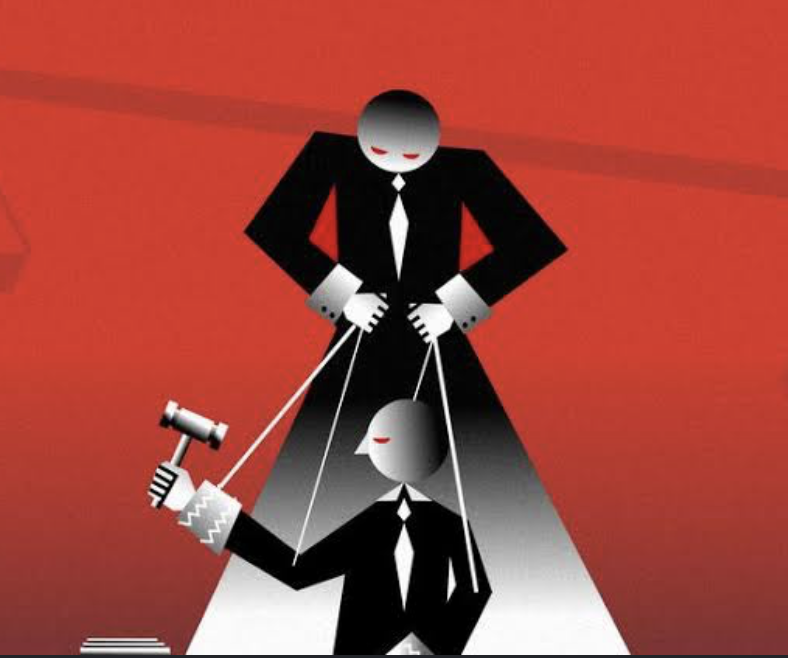
Many moons ago, I wrote about “how to lose an attorney in 10 days.” It is, by-far, one of my most liked blogs second only to “how to exit the court system.” Somehow, the big wigs monitoring the platform on which my site rests do not show any “likes” for my posts; it does make one wonder why. In truth, I no longer wonder; I know that I will keep delivering regardless of any obstacles or subversive attempts to stop factual exposés to assist general Joes navigate an uneven playing field. As I have said in other blogs, knowledge is power and I like to share mine to empower others to make it through. So, on this 7-year anniversary of the date when a judge unleashed his venom on innocents in my life and destroyed almost every part of that life to push me off the cliff – to self-ditch my life – I thought it befitting to commemorate it with a “how to” which is not just a celebration of the fact that I am still alive and well, but to share what worked, and it was not sheer luck. I do not share theories; I caused several unethical judges to self-ditch from my case and no words can describe the sweet victory. So, strap on your seatbelts (as usual) because this “how to” is not for the faint of heart for my specialty is always to give the unfiltered truth, the best way to serve truth. Hopefully, you take something from it, for you or a loved one, to devise your plan on how to cause an unethical and/or biased judge ruining your case and your life to self-eject.
I will save the worst for last so, let me start with the cleavage-lover, an ode to his suggestive preferences. Though there is nothing wrong with men who like women with certain blessings (to each his own), judgeship comes with an oath to be impartial in the administration of justice, which means it requires emotional and mental maturity to control any such anatomical proclivities, on the job or in the courtroom, to rule objectively. Mr. Cleavage-Lover, like several judges I encountered in the US Court, could not be objective to save his life. Per advice from my attorney, who operated before him for years, the main way to cool him down (for his foul temper was easily triggered) and get him to rule in a party’s favor was to show off any frontal baubles in a submissive tone. On information, Mr. Cleavage-Lover’s wife was a tad domineering so he did not like assertive women, those reminiscent of her; in his courtroom, he had to be king. My role, as a party in a case before him, was to stand in his courtroom, dumb and pretty showcasing whatever baubles I may have. I was not inclined to do so or to submit to any form of exhibitionism nor expend money to change my wardrobe on the off chance the 4th judge in my case, an alleged leering Tom, would finally do the job that tax payers pay him and his peers to do. For male parties who have no such baubles to present, having a pretty female attorney was presumably a plus or if one’s attorney is not pretty enough nor a woman, hang one’s chances on a prayer that the other party will sufficiently trigger his foul temper so he rules, subjectively, against them. My attorney was a pretty one; I hired her not for her physical attributes but for her alleged competence in the law to get me quickly out of the court system. Though she tastefully adorned herself most times, on court-dates (per her own advice) she wore clothes with a deep or scooped neckline. It seemed to work until it didn’t; pandering to the emotional fickleness of judges who lack integrity or knowledge of the law or fidelity to their oath leads only to harm. In my case, the harm was multi-tiered and multi-year; 3 predecessor judges working hand-in-hand with attorneys had made a mess of it so by the time Mr. Cleavage-Lover rolled in, no amount of cleavage-baring was going to undo that mess nor the relentless proclivity of court officers to make the harmed party take the blame as an excuse for their inaction. On the day that I made Mr. Cleavage-Lover self-ditch, I was representing myself (pro se). My female attorney sent herself packing within 30 minutes of a prior court date where she knew I was going to be forced to pay alleged “fees” to a good friend of Mr. Cleavage-Lover. My attorney self-ditched to save her own skin for she did not appear inclined to argue the law – against the good friend of Mr. Cleavage-Lover with significant clout – that he had no standing in the case to make such a request much less for any judge to grant it. Naturally, Mr. Cleavage-Lover granted it. I was unprepared, with the sudden attorney loss, to fully argue the law on the court date but I did my best; Mr. Cleavage-Lover who knew the law, acted contrary to it anyway. I filed a complaint and much later, I appealed his ruling, and prevailed, never to pay another cent more to his “good friend.” By the next court date before Mr. Cleavage-Lover, recognizing his penchant to overlook the law, I inhaled the law relative to a motion by the opposing side. I knew the law’s explicit dictates against what the motion sought and knew Mr. Cleavage-Lover, believing as a non-attorney I would be clueless, would grant it. My winning ace in the US Court was most court officers underestimated me. I confidently walked into his courtroom that Fall day, well-dressed, with the neckline of my dress up to my neck like a nun, and calmly asked one question citing the law which barred the motion. He had already ordered one attorney on the case, the court’s representative, to do the dirty work of drafting an order to grant it. Before he could sign the draft and place the court’s stamp on it for enforcement, my question dropped like a grenade with the transport safety pins off. He looked at me for several ticking seconds; I held his angry gaze, silently daring him to answer. To answer, he would have to admit that he was willfully breaking the law or more ignorant on the law than a non-attorney, an assertive woman. Unsmiling, he stated, “Before I do something I will regret, I am recusing myself.” And just like that, Mr. Cleavage-Lover self-ditched from my case; all it took was one carefully worded question. The kind of question matters for I framed mine in a way that any answer exposes the duplicity to his public shame. His courtroom was filled with attorneys watching, listening, who knew the answer to my question, as did I. He could not answer contrarily without shaming himself.
Mr. Cleavage-Lover was replaced by Mr. Leasbach, the one who would, two years later, abet the kidnap of my children. Mere weeks before he did so, he testily spewed in his courtroom, “Who do you think you are?” He too was married, to a woman, but unlike Mr. Cleavage-Lover who sensibly recused himself when asked a question that pinpointed his deviation from the law, Mr. Leasbach, who has clout that went up the state and federal court system, seemed to believe no one would ever hold him accountable. Not only did he not heed notices of his deviations from the law but he seemed obsessed with the need to shut me up, permanently. Several attorneys feared him; I did not. I did not know about his clout like they did nor cared when I knew; the law is the law and no one is above it. Under his tenure, I was subjected to at least 3 warrants for my arrest to force me back into his courtroom to try to intimidate me or to jail me, without notice of what I did wrong nor the lawful basis of his extreme conduct. Soliciting for my children’s kidnap was just one of several extremes. For such as Mr. Leasbach, whose extreme antagonism meant he was out for blood, questions rooted in the law do not work nor are they embarrassed before peers who may loathe them whiles fearing their seeming immunity. The main way I found to get such a judge to self-ditch is public exposure beyond the courtroom, beyond their clout – the kind that dogs his every waking step. I publicly sued Mr. Leasbach and true to form, his clout in high places chose not to hold him accountable and rendered my public case “private” for coverup. After I first sued Mr. Leasbach and before I sued him again, he self-ditched. It was during a court date and I was representing myself; I was living with family and jobless, already showcasing the negative impacts of his relentless campaign against me. But I ensured I had a court reporter present, the only camera allowed, which I took advantage of in order to document his conduct, to study and to strategize on next steps. On that fateful day, my motion was up for address. I laid it on thick; threw one statute to the next knowing that his relative illiteracy in the law, something several attorneys had corroborated, would leave him gaping like a fish out of water. I highlighted the ways he had violated that law, my rights and the rights of my children. He tried to shut me down; I pressed on. When he threw his hands up and recused himself from the case, after 4 years of his venom, it was too little too late. The mess he left and the harm he perpetuated stayed and proliferated.
For those who know quite a bit about the law, the formal way to ask for a judge off your case is to make a request (in writing) to the court – a petition – typically titled “a petition for substitution of judge for cause.” In most courts, a judge who has not yet made any substantive rulings in a case – that is, not made any determinations on the main controversy to be resolved – can be substituted out without having to state “cause” on the lines of prejudicial conduct or extreme antagonism or favoritism harming you. A judge who cannot be impartial nor wants to be, per the judicial code of conduct, has already disqualified themselves from a case but some judges can be stubborn or see no merit in relenting when they presumably hold your nuts in their hands. The reason why I did not mention the formal approach first is because it rarely works; it tends to be a dead-end. It was not constructed to be so but it has unfortunately become so; still, I recommend to do it anyway as it documents, on the case record, that you wanted the judge off at some point in time and more importantly, the reasons why. Maybe one day, someone will take it seriously even if not right away. Judges who are contravening the law or harming parties or criminally targeting others linked to those parties are not doing so in ignorance or unknowingly; so, to ask them to admit their impropriety or willful misconducts to leave your case or to ask their judicial peers to admit the same and remove them off your case is often an exercise in futility. The US Court operates less under self-correction and more under coverup; it is easier to pretend no harm is being done to citizens – be complicit – than to admit the harm and go through the effort or seeming inconvenience of trying to correct it. So, judges appointed to review and adjudicate such substitution of judge petitions rarely, if ever, grant them. It is like the honor code amongst thieves – you oust me, I oust you – so no one wants to walk the rarely used path replete with consequence from fellow peers who can retaliate unless the ousted peer is already blacklisted or low in the food chain (has little to no clout in the judicial landscape) meaning there is no consequence to rule against them. Invariably then, when the prescriptive, formal path to remove judges off a case does not work, several are forced to find other ways, like I did, after years of dysfunction. Before I went ballistic on Mr. Leasbach to get him to self-ditch, I had already tried the formal route, twice. My first petition was given to his well-known crony, who tossed it aside like a dirty handkerchief. My second petition, 3 years later, was given to another judge who, on information, gained his judicial seat under the influence of the same local kingpin who helped Mr. Leasbach get his seat too; to oust a protégé of the same kingpin may well spell ouster from the syndicate. Although he appeared appalled by what was presented and asked for time to consider how to rule, he came back with a denial – Mr. Leasbach was going to stay on. No one was going to offer me relief so, I got it for myself. Eventually, I found out both Mr. Cleavage-Lover and Mr. Leasbach “retired,” the oft polite way of saying asked to leave to save face. It was not nearly enough recompense for what they did to me and others, but as long as there is life, consequences are just as long.
I could provide more examples of successful self-ditch of judges, which can be rare, but I picked the above two to emphasize that for an effective how to get a judge to self-ditch from your case, you need to do your research. I know it is easier said than done as there tends to be very little public information on judges but the court system is made up of people and people talk; learn to be friendly and ask the kind of questions that gets people spilling whether they are aware of it or not. Sometimes all it takes is one tiny piece of information and researching that piece could lead to a treasure trove to inform your strategic how-to. One obvious information is the temperament of the judge which is right before you; if you are in the boxing ring with a lion, you will fight differently than you would a bull with pointy horns – one will head for the jugular vein and the other for the gut. Their point of target is their weakness because make no mistake, trying to get a judge to self-ditch is a battle and you cannot win without information. It is like walking blind into a sword fight; you will fail. Granted, I did not know what would make Mr. Cleavage-Lover fold but I trusted my instincts because often what our conscious mind has not yet registered, our subconscious mind has already picked up on. With Mr. Leasbach, I knew from observing his temperament, over years, and because other attorneys had inadvertently shared their own war stories, how they dealt with him. The goal is to get information about the judge including but not limited to where they are in the food chain – higher or lower – and I am not talking about court levels, but their cronies and who covers or will cover for them – their defense network. A judge who is lower (with little to no clout in the court system) is more likely to self-ditch under a similar setup as Mr. Cleavage-Lover who was apparently under threat of sanctions by an appeals court which would soon cover up for Mr. Leasbach doing far worse in my case. Mr. Flecher was higher up the food chain, not because of years of experience or more competence in the law, but his network. Mr. Leasbach’s kind are a different kind of animal; they tend to be relatively incompetent in the law so the obvious question is how they ever became a judge in the first place; the answer is usually their connections, and those same connections dictate their judicial term’s renewal and allow them to get away with just about anything. Regardless, some can be forced off your case because they are human and they all have an Achilles heel. It is important to note that not everyone in the courts will cover for Mr. Leasbach’s kind and there are those who loathe them enough to freely talk while afraid to act; so, keep your ears peeled. When in court, I also recommend trying not be too consumed over just your case or focused only on the apprehensiveness of standing before a judge you know wants to cremate you or already has started to roast you over a fire pit. Aim to observe how they act with others, how other attorneys interact with them and take notes. You may be able to recognize and copy the style of those attorneys who are able to ruffle them or give them that deer-in-headlights look, a precursor for them to flee the case. Overtly insulting a judge or succumbing to swear words rarely causes them to self-ditch, per my limited experience. Such language tends to increase their vindictive lust and to prevail at anything, including getting a judge to self-ditch, it takes a level head to stay in control of yourself, so I recommend trying to hold your tongue even if you are dying to curse them out, to vent your frustrations. The cunning warrior does not increase his/her vulnerability but rather that of their target. It is unfortunate that I tend to describe a place for justice like a predator’s lair, but it has become so. To keep some of the worst predators at bay, you outrun them – with knowledge – or force them to abandon the chase or your case because it has become too costly for them to stay. Be careful though; one man who did excellent research work on Mr. Leasbach unfortunately failed to outrun him and his network. Said man is indefinitely in jail, for well over 2 years, under the excuse that he has to cough up what he patently does not have, with a crony of Mr. Leasbach at the helm to ensure that the only way he gets out is probably in a coffin whiles his appeal lingers. Some judges are mental misfits, covert lawbreakers who willfully misuse their power so stealth is best and if you cannot cause them to self-ditch from your case, you should consider how to exit the court system altogether. Very few, if any battle, in the courts is worth your life. All the best.
 Behind the Scales of Justice