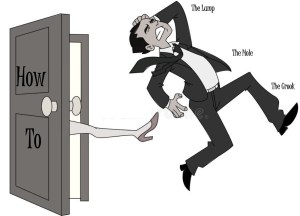
For those movie buffs who see the title’s play on the movie, “How to Lose a Guy in 10 Days” (funny movie, by the way), that is about where all parallels end with this literary dish. Losing an attorney is hardly romantic nor usually comedic nor is this how to gain and lose an attorney in 10 days though, to be fair, it can happen and did happen to yours truly. Yes, I believe it took Mr. Vaughn just 4 days to self-eject from a case after I hired and paid him a nice retainer (as in money) to serve as my legal counsel. Though it was funny to see him turn tail that fast, unable to imbibe in days the case’s vitriol forced down my throat for months, it was not my choice for him to self-ditch. Later, I came to see his leaving as a blessing however painful it was at the time; sometimes God will cut them off before they can (fatally) cut you. For me, it also accelerated my transition to see the courts for what it is or has become to promptly erect boundaries to self-protect before I too could be fatally compromised, as done to others before and after me. Mr. Vaughn was an evaded minefield; I was not quite as lucky with others.
I suspect the reason why any would be looking for tips or suggestions on how to lose or ditch an attorney in 10 days (or less) is because there is enough suspicion or credible information of dodgy conduct by that attorney that may prove costly if permitted to persist any longer, or said conduct has already proven costly and it is time to cut them off quickly to stop further bleeding. Perhaps the attorney to lose pronto has not misfired yet but is a lump – does nothing on the case – with escalating costs from their inaction certain without immediate correction. Or the attorney is just intolerable, frays nerves to the nth degree and it just seems best to send him/her/them packing now before the relationship really becomes toxic with future, negative repercussions. Hopefully, no one is looking to this piece for tips to ditch a (really) good attorney; whatever occurrence spurred you to see the red flag and gleefully charge for an axe to swing, please set it down for a moment and give it some more consideration as the end does not always justify the means – it matters how it is done and why. More importantly, good attorneys are rarities, hard to find and better to keep than to ditch. I say this even if the one retained appears to have extra unique skills on how to get under your skin in the worst possible way, or the mere sight of them hikes your blood pressure. Yes, been there and I empathize but let’s consider some factors or tips before any axe swinging ensues.
Without knowing specifics of any case, I can safely say that when anyone is caught up in some court case or cantankerous legal nightmare, it is important to have somebody who can tell them the hard truths including when they may be losing focus, getting lost in the weeds or derailed by inanity or perhaps made some bad choices that may prove costly to them or the trajectory of their case. Sometimes, the only person well-placed to tell those hard truths that some of us may not want to hear nor enjoy hearing is a good attorney, if s/he is doing the job right – with transparency and open communication every step of the way. My perspective is shaped by experiencing both ends of the aisle, as in I have retained (and ditched) a few attorneys over the years, and though I am not a trained or licensed attorney, life and circumstance forced my hand to become an autodidact of the law to self-represent, in all levels of a state court system and the US federal court system. It was exposure to my handiwork that got others, with perhaps less exposure, to seek me out for assistance. To assist, I was playing a quasi-attorney role, without the money nor open credits for my throughput, but I proverbially got to put the shoe on the other foot to see how it pinches. I can candidly say that I appreciate better what attorneys do or are expected to do after assisting others, which was not as clear when a client. One challenging person I assisted, all the way to the US Supreme Court, gave me many “aah” (light bulb) moments. I lost count of how many times she hung up the phone whiles I was in the middle of telling her what she needed to hear or (timely) do. I stayed put through the storm because I cared enough to stick my neck out for her, I knew the fear underpinning her behavior, and I also knew without my assistance, she was going to be baked to a crisp or cremated in the courts. She reaped the benefits of lessons I learned, the hard way, so neither she nor hers would have to pay the price that I and mine had paid. Some of her intransigence did prove costly.
With the stage set, the first key criterion on how to lose or ditch an attorney in 10 days (or less) is to determine why you need to do so that fast. Is it in search of some instant emotional release after a recent upset or to feel in control of a spiraling situation that firing the attorney may only worsen. There is no point in cutting one’s nose to spite one’s face; whatever is done should not harm or be an inadvertent setup for (more) harm. With that said, there is no path without risks and sometimes it is impossible to go completely unscathed when severing ties; attorneys are human, several have oversized egos or messiah complexes and when cut, some react badly or vengefully. Still, severing ties can be worthwhile; like a bad marriage or an unhealthy liaison, it doesn’t get better just by staying put, afraid to rock the boat nor just turns around without measures to make it better or in the ongoing futility of measures to get to better.
Since I can in no way exhaust all the whys, it seems best to use illustrative examples of the types of attorneys several tend to cut off fast; the attorney to lose may be somewhere along the spectrum of what I have dubbed “the lump,” “the mole” and “the crook.” The characterizations inform of some of the whys a client may want to ditch them with a sampling of how to ditch them, so by no means exhaustive.
THE LUMP
Characterization: This is an attorney whom a client perceives is not doing anything to move their case or requests forward – a lump – as in a mere caricature adding little or no value and at risk of malignancy – imminent (irreparable) harm to the client. It is easy to excuse such as lazy but it is often more nuanced than that for “the lump.” A truly lethargic attorney coasts for a while but rises to the occasion just before harm can erupt, but not “the lump.” With “the lump”, the client often attends one court session to the next with no clear throughput; filed requests are never/rarely scheduled for address before a judge nor addressed even when scheduled (as in, they drop off the radar) OR a request the client has asked “the lump” to push forward multiple times via (frustrated) emails, phone calls or in-person do not get drafted much less filed for address. The legal parlance “filed” is a synonym for “submitted to the court” and how it is submitted matters (a future how-to piece). If not properly “submitted to the court,” the client’s request for all intents and purposes, never existed in the eyes of the court, even if “the lump” knows it from a gazillion discussions, and it was mentioned in court before a judge. “The lump” is (often deliberately) blocking their client’s voice and access to relief to which they may be entitled for reasons that may include a (hidden) bias – gender, racial or other self-interests – causing incidence of “the lump.” It is not that “the lump” cannot do as asked, they can but chose not to for that client. It is silent sabotage.
The corollary effect is the client is losing time and bleeding money (in attorneys’ fees, transportation costs to/from court, lost wages, to name a few) with little or nothing to show for all their inputs, whiles “the lump” who is consistently remiss in moving requests to outcomes, tends to be exceptionally prompt at invoicing for every (frustrated) phone call, email, (fruitless) court session thereby impoverishing the client, on several fronts, to line their pockets. Any attempted conversation, as a measure to fix the dysfunction or skew in the relationship, is overtaken by “the lump” gaslighting the client and/or pressuring for (more) payments of any unpaid invoices instead of open address of the lack of throughput relevant to the client being impoverished each passing moment with “the lump”. “The career lump” is in the (criminal) business of repeatedly fleecing clients by depriving them of the benefits of their legal expertise using the pretense of performance; it takes no special skill to sit in a courtroom and watch a judge blabber on from case to case or even to submit a request into a court’s system. For the “career lump” it is not the occasional rip off or purloin but a business model to which profit margins are tied; “the career lump” is also “the crook.”
How To Lose “The Lump”: The how often depends on how long the fleecing or impoverishing has been going on with “the lump”; if it is early on in a case and what is lost is some portion of the retainer, it is not ideal but the effort-to-benefit ratio may suggest the client’s best bet is to find a new (better) attorney quickly then have that new attorney be the one to tell “the lump” they have been kicked to the curb or replaced. This way of ditching is called “substitution of attorney”; it is a passive-aggressive way for those who prefer to avoid any head-on confrontation with “the lump” or just do not have the bandwidth, the skill or the stomach to swing a heavier axe. It is ditch-by-replacing and its the replacement’s foot that delivers the kick. This obviously still works even when the dysfunction has lasted for a long time for the client.
It is important to highlight that even though it is easy to fire, for example, a plumber or even one’s doctor and that singular action of firing or replacing finalizes it, it is not so in the courts. The courts have the final say on whether or not a fired attorney leaves as attorneys are officers of the court; this simply means an attorney’s allegiance is to the court – they listen to and primarily serve the court – not a client. I know this is a hard swallow and contradicts the universal truth that the person who hires and pays trumps, but not in the courts. The intended positives of that allegiance is an attorney is a guide to their clients on how to navigate the courts and the law, not for a coup d’etat of that law. The not-so-positives of that allegiance play out when the courts are corrupt or its officers have overthrown the law, which is no longer king, thus leaving in its place a syndicate with several kingpins or pimps doing as they please with clients’ lives and what is theirs as bargaining chips or collateral in a game several are unaware is being played. The true “winners” in the courts have become its officers and that is why some attorneys may be quick to tell a client which judge they “know”, as in who they can persuade to align to their asks, not necessarily the law.
As a consequence, the attorney is only truly “lost” via (a) (Endorsed) Substitution and (b) Order of Court. This is not to say “substitution” or replacing an attorney is without an order of the court but it tends to be quicker or can happen as soon as the client identifies a new attorney to present to the court to replace. Additionally, “substitution” often suggests an “agreement” exists between the client and “the lump” to part ways and a judge does not necessarily weigh in on why the client-attorney relationship is being or should be terminated. Paperwork that tends to go with a “substitution” request has or requires the signature of the client, the signature of “the lump” and the signature of the new attorney – the markings of an agreement.
If the client is not ready to replace “the lump” (if ever) but must lose them right away, option (b) applies. Here, the client is dependent on “the lump” to request the court to allow them to leave or withdraw and such a request must state why to allow the judge to adjudge the merits – to grant or to deny it. Clearly, there is no suggestive agreement here as there are times when some clients cannot afford for an attorney who wants to leave to do so or the attorney is not inclined to leave even when the client desperately wants to get rid of them (usually “the mole” or “the crook”). The court has a mandate which encompasses avoiding disruptions in cases: attorneys are expected to stay till the end of a case with only a few reasons allowed for them to leave so those who traipse in and out of cases at will is not in conformity to that mandate. Additionally, it harms clients to pay (yet) another attorney to come up-to-speed on a case and things do get lost in translation or in transitions from one to the next. More than that, it slows down a case’s path to resolution as outside the hiccups that the learning curve of a new attorney introduces, a judge is reasonably expected to give time, at least twenty-one (21) days, for the client to find a new attorney, so the case goes on temporary hiatus. Obviously, not all judges respect this mandate; no one holds them accountable to it and whether or not they allow time for the client to find a new attorney is discretionary just as a judge can choose to ignore the true why a client and “the lump” must part ways to only penalize clients for it, e.g. not allowing time to find another attorney. In short, with option (b), the client is more at the mercy of “the lump” who can choose not to seek leave of the court, delay it or willfully color the client black on doing so. I have yet to meet an attorney who openly admits their negligence/inadequacy and yet to find a judge who does not blame a client for the rapture of client-attorney relationships; perhaps 10 years is not enough time for me to isolate a judge who does.
The heavier axe comes into play when “the lump” refuses to leave or the fiscal loss from their fruitless engagement is significant and/or the non-fiscal losses may involve (sexual) abuse or other crime coverup exacerbated by their inaction plus other (realized) threats to life and safety of the client; in short, the inaction or negligence has led to heavy damages outside what was paid, in part or whole, in fees and it is time to go ballistic. The heavier axe means the client does more than just find another attorney or steps into the case immediately to self-represent (if they have the skill); they pursue those damages and censure of or sanctions against the attorney. One of those could be by submitting a complaint to the Attorney Registration and Disciplinary Commission (ARDC) in the state where the attorney is registered. Yes, a body exists in each state, not only to register attorneys to practice law in that state but to discipline those who violate their oath and the code of professional conduct for attorneys. Unfortunately, several of these commissions avoid the “discipline” part like the plague leading to a sorry state of affairs allowing any syndicates to thrive, repeat harm to clients and deterioration of trust, of the client and the general public, in the courts and in its officers. Since the goal is speed, in 10 days or less, walking in with a complaint or delivery via express mail is best; never email a complaint into some central mailbox with an unclear owner as it becomes an easy target for some nameless person to hit the “delete” on that submission to ensure no trace it was ever submitted against an attorney who may very well be their crony, meaning there is a vested interest to coverup for that attorney in the very commission set up to discipline them, if necessary.
Some may ask why bother then with the ARDC. First, not all are compromised. Second, submitting a complaint, properly, (a) tends to put most attorneys in a panic (from public exposure) to immediately self-eject from a case; (b) it shows, for a specified time period, what the client allegedly dealt with and/or lost on account of that attorney. Some commissions may launch investigations and penalize the attorney by allowing some, if not all, fiscal losses to be recouped and may even suspend their license, to cut them off at the knees, temporarily. Some attorneys can be mischaracterized as “the lump” when it may be a brief period of performance issues, due to personal/medical challenges, that the commission may choose to excuse as such but not when repeat – “the career lump” – showcased by volume of complaints. If each impacted client submits a complaint, it allows the (historical) data to tell the story that these are not one-off incidents or the hocus-pocus of a disgruntled client, but a practice for the heavier axe to swing at last, if not at once. Sometimes all it takes is the ultimate complaint to topple “the career lump” from accruing more victims with those who complained prior unlikely to benefit individually or at all but others are spared; it pays to consider the collective good even if not individually served. If no one complains, it is likely why “the lump” can and will accrue its newest victim – you. I wrote complaints for willful (and repeat) violations by attorneys, and though an investigation was not assured, it immediately got some – “career lumps” or “the mole” or “the crook” to self-eject and ultimately that is what this “how to” is about.
THE MOLE
Characterization: This is an attorney whom a client perceives is not just failing to move their requests along or forward, but appears to be actively sabotaging them or their case. The client may have “a mole” on their hands and those are hard to ditch because even though the client may have agreed to or was involved in recruiting them into the case, they stay to serve their own purposes and that of the establishment, a gavel-wielding thief or kingpin. “The mole” tends to occupy roles of public guardian, guardian ad litem, child representative but also are attorneys to clients who hired them for self. I went into some detail on the court or judge’s role to lose “the lump” so some things are already clear relative to other types. Another name for “the mole” is “the conspirator”; theirs is to participate in a conspiracy from which they and others benefit, not the client. By reason of the client-attorney relationship, “the mole” becomes privy to things the client may otherwise not share with them or anyone if not in the hope of getting their expert guidance for legal relief. The info-share is instead leveraged or disseminated in sabotage, for the harm or the suffering of the client. Often “the mole” may align to psychological profiles of sociopath or psychopathy, as in outside having biases that may not serve their client, they actually enjoy the sabotage perpetuated under a prey-predator model where their client is the (unaware) prey.
The effectiveness of “the mole” lies in subtlety and subterfuge; “the mole” tends to say and is very good at saying the right things before retained and sometimes even after, but their actions do not match their words and such a discovery only tends to come after they are hired. The goal is to reel the client in, hook them and place blinders that makes it hard to see what is going on or about to happen, to their harm.
As an illustrative example, I once hired “the mole” (unknowingly); quite honestly, no other attorney came close on my trust meter. Before hire, he was honey – said all the right words that soothed each wound I shared and agreed with what needed to happen immediately, by reason of (in)action by other attorneys prior, so in dire need of address. He was my replacement for “the lump” before him. What I did not know then was several of “the lumps” I lambasted were cronies with the main agitator – a “career lump” whom I passionately nailed to a cross – his former roommate in college so no casual acquaintance. “The mole” does not disclose existing associations that allow a client to see a conflict or suspect any conspiracy. One area in want of address when I hired “the mole” was ongoing risks to my safety, with past incidents, at an exchange location selected by the main agitator that police officers had advised over and over again was inappropriate, had to be changed by the court, as dark and isolated, to something public and well-lighted that not only makes visible any attempted impropriety but discourages it. It never changed; “the mole” sat with his former roommate after a court session on the same and picked another dark, isolated location further out, as an alleged temporary fix, worsening incidents and my suffering to their fiendish delight. Unlike “the lump”, “the mole” may file requests but sabotage outcome with co-conspirators.
Since “the mole” tends to be adept at saying what clients seek to hear but do the exact opposite, it can lead to extended client-attorney relationships as the client assumes or suspects any number of things for the lack of throughput or doctored outcomes, never “the mole.” This means the impact of ditching “the mole” can be more substantial as they tend to be in cases much longer before they bolt. Yes, “the mole” is a perennial bolter and fears exposure more than most meaning any significant risk of exposure causes them to self-eject quick; when they submit a request to leave, they tend to omit why they want to leave and the gavel-wielding thief allows it without plumbing for or questioning any glaring absence of a why known, via poisoned ex parte communications or agreements precluded from open discourse in court.
How To Lose “The Mole”: The way to ditch a mole is to tap into their fear of exposure so they self-ditch; their effectiveness rests on working undercover, undiscovered, and trusted by clients. Passive aggressive is not likely to work with “the mole” – it takes open questioning, preferably face-to-face, to read their body language, if not also for clients adept at expressing without anger, to showcase the impact of acts against them so it visually hits “the mole” – some are hardened/insensitive, but not all. Though some clients may prefer (veiled) threats, instead of questioning, that is not my style; I prefer (and recommend) paths to collect proof for other paths to relief, that is to be strategic. The questions asked should be some (not all) of what the client knows or suspects is being done in sabotage, with a significant pause to allow for explanation. Most moles cannot explain and some inadvertently confirm when flustered; most will self-ditch – cut their losses – in a bid to avoid full exposure of their part in any conspiracy for their client’s harm, as it can cost them their license given such acts count as one of the worst violations of their oath. When I questioned “the mole”, my goal was for elucidation. I did not know much then and refused to believe him capable of working with others to my harm; I trusted him that much and I was emotionally hedging from the pain of knowing my trust was betrayed. I only wanted to know why he did not do what he said he would, with written proof, and he chose to flee as my few questions seemed to suggest to him that I was on to him and his co-conspirators. In truth, it took years after the bolt to realize the extent of harm/suffering he participated in, at my expense. Whether it was to fit in with some clique or to save his own behind seeing the establishment had it in bad for me did not matter. When it is no longer fun for “the mole,” they flee so to lose them there are a plethora of ways to make it no longer “fun” for them to stay.
THE CROOK
Characterization: This is an aggravated version of “the lump” and “the mole” with outright law-less throughput including but not limited to orchestrated deaths of clients, sexual assault/rape, kidnaps and coverups of the same/similar for (irreparable) harm not isolated to the client as further reaching. An attorney’s sworn allegiance to the law means it does not take them being a protagonist of an illegal act for “the crook” to be born, as silence on the act makes the attorney complicit, tantamount to a coup d’etat on the rule of law with guns of silence, that kill just as well as guns with bullets only with outcomes slower to see or to perceive. Though most in the US may not be as familiar with those who support or drive (military) coup d’etats against the will of the people, in other parts of the world, such are duly labeled and treated as criminals. No matter how the acts and the silence may be re-packaged to make them palatable as non-destructive, both cause irreparable harm and none sanctioned by the will of the people. It does not take a license to practice to law for anyone to respect and uphold it, but those who have such a license and allow the rule of law to be usurped have duly earned the label of “the crook.”
How To Ditch “The Crook”: “The crook”, per the above characterization, has reached a level of ballsy in operations which means they do not scare easy as entrenched: they tend to have connections in high places, who cover for them no matter how glaringly illegal or atrocious their actions. For the client, there is almost always backlash to lose “the crook” as losing them does not necessarily mean they cannot enlist others (due to their clout) to continue any conspiracy, including the repeat quash of that client’s voice in a case, even with initially reluctant participants who may face retaliation if they do not do as directed. “The crook” tends to be higher in the food chain and malignant like cancer – they easily infect neighboring cells (attorneys) with fear or other poison. Subtlety works with such as if or when they find out a client is on to them, they rarely flee, they hit harder; so, limiting the questioning that works with “the mole” or one lower in the food chain is best, replace them quickly and with care not to lambast them to any replacement who may just turn around to use it to curry favor with “the crook” at the client’s expense.
There are instances where the only way to deal with “the crook” is to go ballistic. For me, that meant suing all co-conspirators in federal court with few, if any, wise to the fact that I was onto them, until they read the public federal compliant; I was years into repeat harm at that point. It was pandemonium in “the crook” camp and attempted retaliation galore but I knew enough about how they roll to deflect; nothing beats the satisfaction of exposing “the crook” with a false persona of infallibility and morality. It gets other “crooks” lower in the chain to think twice before to attempt similar as the client has proven openly, they can and will go after the kingpin “crook” and sycophants who may want to join for the client’s harm.
FINAL CONSIDERATIONS
It may not have escaped notice that I was not prescriptive on what to do each day, of 10 days, to lose an attorney, because though it is feasible to lose one in 10 days (or less), timing is driven by specific factors in or outside a case, which may not be subject to influence or control at once or at all. Some factors are when a “better” attorney can be isolated by the client (to allow replacing the bad nut), notwithstanding the process of finding “better” and the definition of “better” is not trivial. Unless the replacement is the client, via self-representation, executable in 1-2 days per the client’s know-how, challenges exist. Add in any hurdle to isolate funds to pay another retainer to a new attorney, for the fiscally-limited client without a pro bono option, and it is less about the will but of managing constraints. An additional factor is when any substitution or withdrawal request can be scheduled on the court’s calendar; an “emergency” request could accelerate the timeline to 3-5 business days, but it is not guaranteed as some judges may not treat it as an emergency. The court is not a warm, fuzzy place filled with empathetic people: what is urgent for a client or party needing immediate relief rarely seems to translate to officers of the court, some of whom actually use delay tactics to injure parties. If an important session is coming up in a case before address of any substitution or withdrawal request, the client’s finger is proverbially still in the attorney’s mouth (i.e. it may be impetus for a retaliatory bite before their exit) so it may be good to orally request the judge postpone any such session until after the substitution/withdrawal request is addressed. In short, exercise prudence, limit swift emotional acts that do not serve in the long run knowing even with care, some attorneys are not mature enough to roll with it. All any client/party can do is move forward as best as possible and karma will deal with “the lump”, “the mole” or “the crook” who may want to retaliate. How to lose an attorney is not an exact science but it is achievable in 10 days (or less), with caveats. All the best.
 Behind the Scales of Justice